Unlocking the mysteries of eczema
Enjoy the first edition of Our Medical Journey, where we explore the world of eczema, diving into the science behind it and even some tips from people who have had eczema!
Have you ever felt that your skin has a mind of its own? From being perfectly calm and controlled, to an instant switch to it starting to itch, then burn, then bleed! It happens so quickly, and yet the effects are so long-lasting. Well, we call this eczema!
WHAT IS ECZEMA:

So, what is eczema? According to the National Eczema Association, eczema is a “skin condition that causes dry, itchy skin”. Eczema is a visible condition and can vary in appearance depending on your skin tone. For light to medium skin tones, it may appear as pink or red rashes with bumps and crust. For medium to dark skin tones, it may look dark brown, gray or purple with dry, small bumps.
Eczema can also change in appearance depending on how long you’ve had symptoms, making it difficult and even overwhelming to tackle. People diagnosed with eczema often describe a phase of eczema that can last many days or even several weeks as a “flare”. Specially severe cases can even lead to hospitalization, however when talking about such conditions, its dangerous side is often ignored.
SCIENCE BEHIND ECZEMA:
Eczema, also known as atopic dermatitis, is actually the most common form of dermatitis and affects millions of people worldwide, particularly children, with up to about one in five affected at some point in childhood. At its core, it’s caused by a mix of genetic and environmental factors that make the skin both dry and very sensitive. Many people with eczema have changes in certain genes such as the filaggrin (FLG) gene, that helps build the skin’s outer barrier. Filaggrin is a protein that is essential for keeping moisture inside the skin and stopping irritants and allergens from getting in, so when the gene doesn’t work properly, the skin becomes “leaky,” dry and patchy, and therefore more likely to get itchy, inflamed or infected.
Apart from filaggrin, many other skin-barrier genes and immune-related genes are involved too. In addition to genetics, environmental triggers like harsh soaps, dust mites, certain foods, stress, changes in temperature or humidity, and even infections can spark or worsen flare-ups because the immune system reacts too strongly to these things, leading to inflammation and skin damage.
MENTAL HEATH CONNECTION

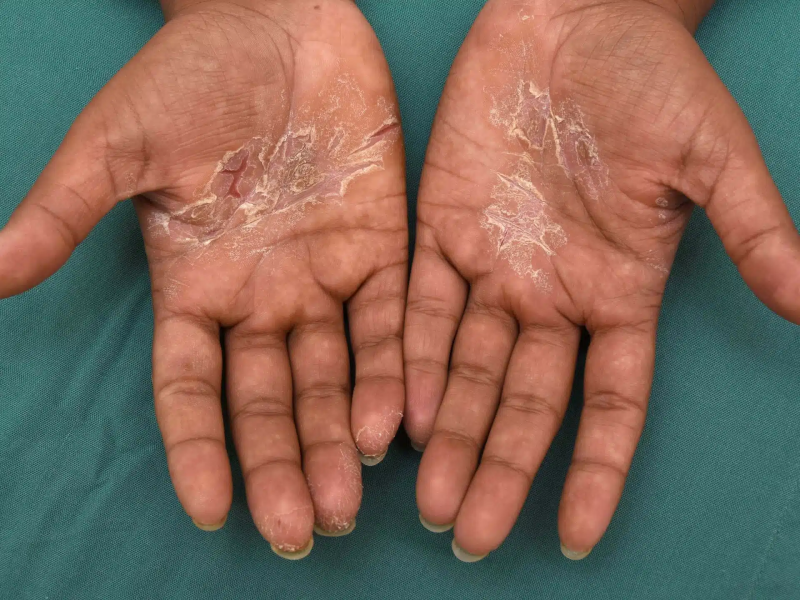
Eczema doesn’t just affect your skin - it creates a significant toll on your mental health as well. The constant itching, the lack of sleep, and the spontaneous bleeding all lead to an increase in depression, anxiety and even low self-esteem. When we are stressed, we tend to start fidgeting, and for those with eczema, it’s scratching our skin to feel that instant relief. However, over time, as this continues, we find ourselves getting stressed because of our skin and the consequences of scratching, which leads to a never-ending cycle. It is absolutely prevalent that we break that cycle and not be controlled by the shackles of this chronic skin disease.
Not only does stress cause such a psychological impact, but it’s also the judgment and opinions of others. According to a survey done by the British Skin Foundation, “53% of those with a skin disease feel judged by others due to their skin condition”. Having eczema on your face or your hands is a challenge in itself; it leads to prejudice and others asking questions such as “What’s wrong with your face?” or statements such as, “No one will ever hold your hand”. Hearing such harmful comments at such a young age is so harmful to your self-esteem, and leads to an internal dialogue of criticism and always making yourself feel less than. Follow the tips and tricks listed below if you find yourself struggling with this.
Eczema isn’t just about the physical impact it has on your skin and the hopes that it will all go away with the use of a topical steroid and moisturiser; there is a world behind this, full of insecurity and diffidence. However, with all this being said, this is also a disclaimer that not everyone with eczema feels the same way. Some people will inevitably thrive mentally, while others feel so entangled. Therefore, it is of utmost importance that we understand our own skin and not allow any negative comments to enter our minds.
TIPS AND TRICKS:
While these suggestions may help some people, they won’t work for everyone. Everyone’s skin is different!
- Ice Pack - From having eczema for most of my life, I found having an ice pack was ideal, especially on those hot summer days. The cooling effect of an ice pack overrides the itchiness and can also reduce any inflammation.
- Mini Fan - Investing in a mini fan is perfect on a hot day, as it will again help you when you feel so overwhelmed with your eczema.
- Bandages - This is something that allowed my skin to have so much moisture. Applying a thick layer of moisturiser and then wrapping wet bandages on top allowed me to have a good night’s rest without waking up in the middle of the night to itch my dry skin.
- People - Surround yourself with people who don’t belittle your eczema into something that is not important. Having a positive circle allows you to have a much more positive mindset about your skin.
- Eczema Journal - If you are unsure of what could be triggering your eczema, keep a diary of what you have eaten or come in contact with. This could be soaps, deodorant, perfume, and write the effect it has on your eczema. This means that if you go for a skin patch test, you can request those specific items that you suspect of flaring your eczema. It also means that you know what to avoid and what is fine to keep using.
Well, that’s the end of this month’s topic! If you enjoyed this article or would like to suggest a topic, email Ishita (ishitakarvapalli6@gmail.com) or Aiza (aiza15spk@gmail.com).
As always, we would like to state that we are not doctors and are not writing these blogs as medical advice; they are designed solely to compile scientific knowledge and shed light on various medical conditions.
REFERENCES:
- https://nationaleczema.org/eczema/
- https://nationaleczema.org/eczema-management/itchy-skin/
- https://eczema.org/blog/the-mind-body-connection/
- https://www.ncbi.nlm.nih.gov/books/NBK538209/
- https://www.britishskinfoundation.org.uk/news/over-half-of-those-with-a-skin-condition-feel-judged-by-others
- https://www.healthcentral.com/condition/eczema/eczema-hyperpigmentation (Picture 1)
- https://dermconsult.co.uk/the-different-types-of-eczema-which-one-do-you-have/ (Picture 2)
- https://eczema.org/information-and-advice/types-of-eczema/hand-eczema/ (Picture 3)
Create Your Own Website With Webador