CHRONIC KIDNEY DISEASE
What is Chronic Kidney Disease?
Chronic kidney disease is a long-term condition where the kidneys are damaged or fail to filter blood as well as they should. Many people live long lives with this condition, however it can get worse over time and in certain cases the kidneys can stop functioning entirely.
There are usually no symptoms of CKD in its early stages, but if they do occur, they may include the following:
- Urinating (peeing) more often or less often than usual
- Itchy and/or dry skin
- Feeling tired
- Nausea
- Loss of appetite
In the more advanced stages of CKD:
- tiredness
- swollen ankles, feet or hands
- shortness of breath
- feeling sick
- blood in urine

Risk Factors
CKD is oftentimes the result of other health conditions that place a stress on the kidneys, ultimately leading to them becoming damaged and unable to carry out their job effectively. This includes things such as high blood pressure, which strains smaller blood vessels in your body and therefore, the kidneys are unable to efficiently remove waste and extra fluids from the body. Diabetes also has the potential to lead to CKD - excess glucose in blood can damage the tiny blood vessels and filters in the kidneys, disrupting their function. Similarly, high cholesterol can damage the tiny blood vessels in the kidneys and also cause a build up of fatty deposits in blood vessels supplying blood to kidneys, which reduces blood flow which damages the kidneys over time.
Other kidney infections and disease can also lead to CKD. Glomerulonephritis - more commonly known as kidney inflammation - is damage to the glomeruli (tiny filters) in the kidneys. It's often caused by your immune system attacking healthy body tissue, and if untreated, leads to complications such as CKD.
Chronic kidney disease is the most common type of kidney disease; it is where the kidneys slowly start to lose their ability to function, and if untreated over time can lead to kidney failure. However, the majority of people with kidney disease do not display symptoms, especially in the early stages. In this article, we explore the symptoms, risk factors, and available treatments of chronic kidney disease (CKD).
Stages of Chronic Kidney Disease
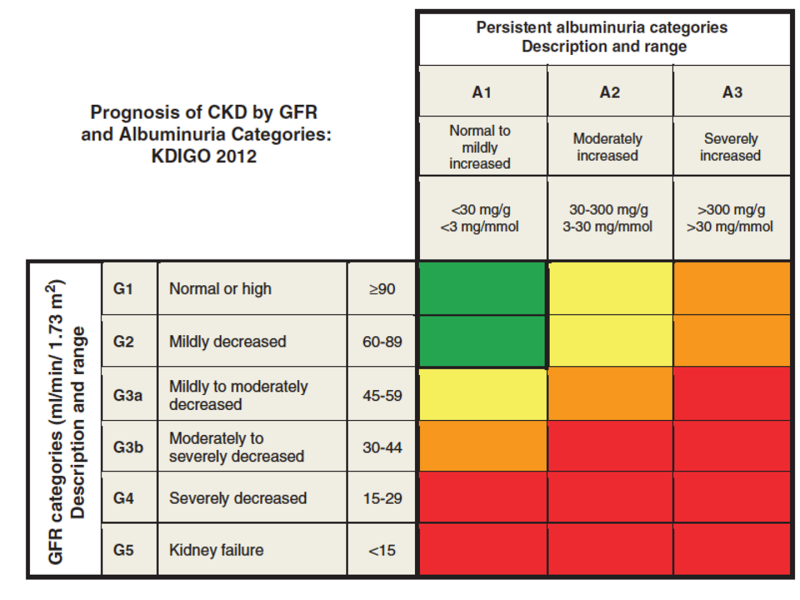
Stage one of CKD is the point at which the kidneys are functioning well, but blood and urine tests have displayed initial signs of damage. The estimated glomerular filtration rate (eGFR) at this stage is 90 milliliters per minute (a measure that is used as a rough indication for kidney function) which is considered normal, so other tests are used as diagnostic markers. For example, the amine albumin creatinine ratio urine test (uACR) that identifies the level of protein in the urine may show a higher value which means there is a higher risk of CKD and also of cardiovascular disease. If a patient is diagnosed with stage one of chronic kidney disease, treatment is necessary to ensure that the risk of further deterioration in the future is controlled, as the damage will lead to decreased efficiency in kidney function over time.
Stage two of CKD involves diagnosis through the same tests, except this time the eGFR tends to be between 60 and 89, which means that the kidneys still largely keep their ability to filter blood. There is a low chance of there being many observable health changes, and although some patients experience symptoms, the majority do not experience any. Treatment is necessary for similar reasons to stage one.
During stage three, the kidneys are more damaged and so less able to remove waste and fluids from the blood. At this point, loss of normal kidney function can potentially lead to issues such as high blood pressure and cardiovascular disease. Stage three is usually split into two parts based on the eGFR:
- Stage 3a: eGFR of 45-59ml/min/1.73m2
- Stage 3b: eGFR of 30-44ml/min/1.73m2
The urine albumin creatinine ratio (uACR) test identifies the level of protein in the urine, and this time the levels are rather high, which shows increased risk of CKD worsening and Cardiovascular diseases developing. At this stage, symptoms start to arise.
A diagnosis of stage four CKD indicates severe reduction in kidney function. At this stage, estimated glomerular filtration rate (eGFR) is between 15 and 29ml/min/1.73m2. The risk of CKD progression and other health problems is extremely high for stage four patients. Symptoms tend to be in full progression.
Information
There is currently no definitive cure for CKD but treatments can prevent progression of the disease and relieve symptoms. The first line of treatment often involves encouraging lifestyle changes, and medicines to control associated conditions and risk factors, such as high blood pressure. More extreme forms of treatment can involve dialysis and may even require kidney transplants to be used.
Our approach is focused on understanding your needs and providing practical solutions. From personalized consultations to hands-on assistance.
Dialysis
Dialysis acts as an artificial kidney and performs the functions expected of healthy kidneys to keep patients alive. Dialysis is typically used for two scenarios:
- Acute kidney injury (AKI): a sudden episode of kidney failure or kidney damage that happens within a few hours or days. AKI is usually treated in a hospital setting with intravenous fluids. In severe cases, dialysis may also be needed for a short time until the kidneys get better.
- Kidney failure: when 10-15% of your kidney function remains, measured by an estimated glomerular filtration rate (eGFR) of less than 15 mL/min. At this stage, your kidneys are no longer able to keep you alive independently. This is also known as end-stage kidney disease (ESKD).
For patients with kidney failure, dialysis is not a cure but rather a treatment they require for the rest of their lives, or until a kidney transplant can be obtained.
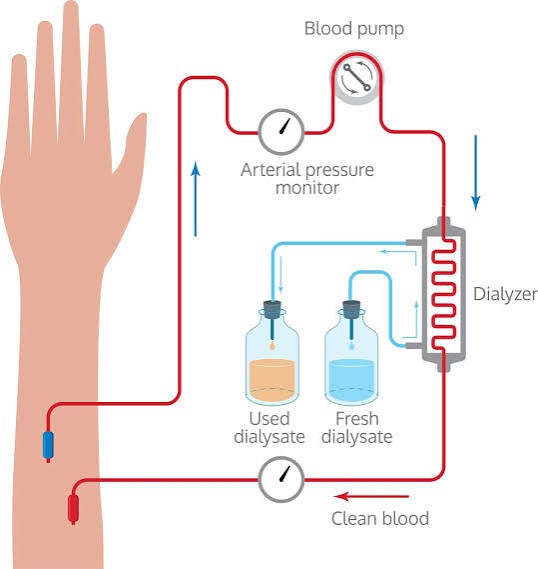
Dialysis works by removing waste and extra fluids in your body to prevent them from building up in the body, keeping safe levels of minerals in your blood, such as potassium, sodium, calcium, and bicarbonate and also helping to regulate your blood pressure levels. There are two types of dialysis, which are as follows:
Hemodialysis
- A dialyzer (filtering machine) is used to remove extra waste and fluids from the blood, before returning the blood to the body.
- This requires an access site, typically in a patient's arm, which is created by a minor invasive procedure to open an appropriate blood vessel.
- Treatments can be done at a centre or at home, and tend to last for a couple hours, three times a week. Certain people may require more treatments, depending on their condition and needs.
Peritoneal Dialysis
- This is when blood is filtered inside your own body instead of using a dialyzer machine.
- For this type of dialysis, the lining of your abdomen (also called the peritoneum) is used as a filter.
- Here, minor surgery is also required to place a catheter in the abdomen.
- After the process, which takes a few hours, the fluid mixture is drained. This procedure can be done anywhere that has the appropriate equipment.
All types of dialysis are equally effective, but a patient's medical condition and personal preferences may match one treatment approach better than others. This decision requires conversations with the doctors responsible for a patient's care.
Conclusion
Chronic kidney disease affects approximately 7 million people in the UK, however early detection and effective treatment oftentimes leads to the majority of patients living fulfilling lives. Although CKD is only one branch of kidney diseases and conditions, we can see that it can present differently (and therefore need to be treated differently) depending on the patient and the stage they are in.
Well that’s the end of this article! If you enjoyed this blog or would like to suggest a topic, email Ishita (ishitakarvapalli6@gmail.com) or Aiza (aiza15spk@gmail.com). As always, we would like to state that we are not doctors and are not writing these blogs as medical advice; they are solely designed to compile scientific knowledge and shed light on various medical conditions.
Create Your Own Website With Webador